
About this KNoT
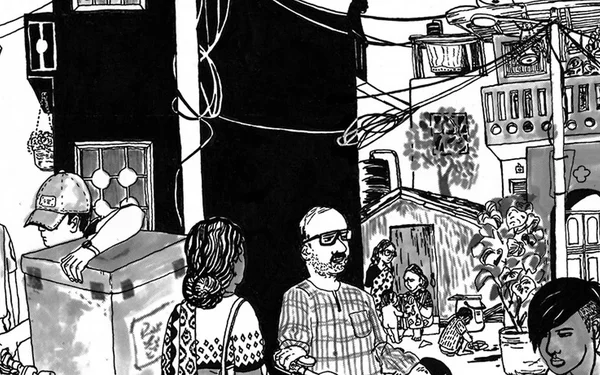
This is a hands-on workshop where we’ll use drawing, comics, and zine-style layouts to explore how to express complex ideas in simple, creative ways. No experience necessary.
Preparation
What You’ll Learn
No art skills or design background needed — just a pencil, some paper, and something you care about.
Whether your research involves lab work, archival digging, or everyday experiences, we’ll help you sketch out a mini-zine page (or two) that communicates what it’s about — or why it matters. Along the way, we’ll explore how words and images work together — not just to simplify ideas, but to express their depth and nuance differently.
What we’ll do
- Learn the basics of what makes comics and zines work
- Look at examples of comics that do research (yes, that’s a thing!)
- Try short, playful drawing exercises to loosen up
- Break big ideas down into visual scenes and simple steps
- Make at least one zine page based on something you're working on or curious about
- Share your work (if you want)
What you’ll learn
- How to use simple drawings and layouts to explain an idea or tell a story
- How comics and zines work — what makes them clear, fun, or powerful
- How to combine words and images to express something that’s hard to say with just one or the other
- How to break big or complex ideas into smaller visual moments
- How to explore research questions creatively — through storytelling, not just explanation
- How to experiment without worrying about being “good” at art
- How to give and get friendly feedback that helps you see your work in a new way
- How to make a zine page from scratch
Learning Resources
A student about her PhD journey Thesis notebooks – Tiphaine Riviere - comics are in French but the visuals communicate well.
Akesson, B., & Oba, O. (2017). Beyond Words: Comics in the Social Work Classroom. Journal of Social Work Education, 53(4), 595-606.How to Complete This KNoT
Writing your reflection
Most completion tasks ask you to reflect on what you did. For prompts, sentence starters, and the five areas a strong reflection covers, see Writing Your Reflection. Your completed tasks come together at the end of the semester in the Completion Evidence.
Keep an eye out for the next session.
Past dates (3)
- Mon 12 Oct 2026, 1:00 PMJoY: John Yencken [45], Ground Floor
- Mon 18 May 2026, 1:00 PMJoY: John Yencken [45], Ground Floor
- Fri 03 Oct 2025, 10:00 AMJoY: John Yencken [45], Ground Floor